
For regular readers of this column, you may be surprised to hear that I sold my 1940 Ford coupe. But not to worry, I bought another ’40. Here’s the rest of the story....
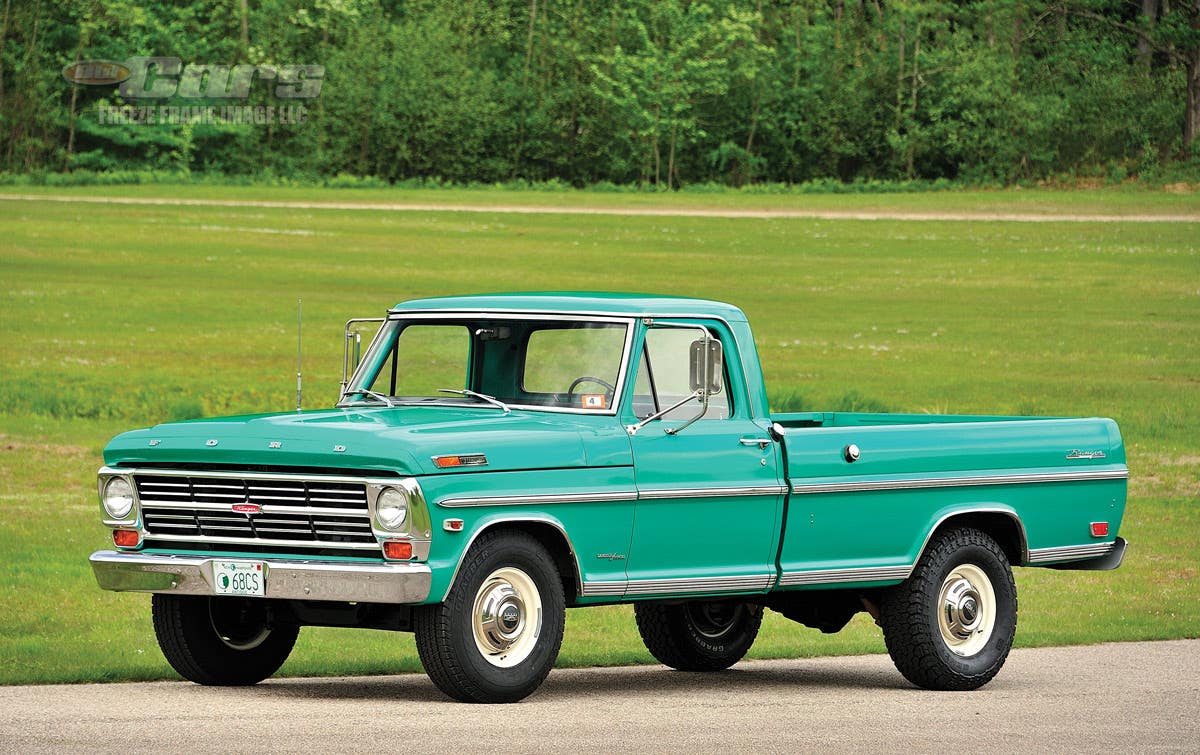
Last year, I thought it would be fun to buy a 1955-’56 F-100 pickup. When I was in high school (you can see where this is going), a classmate named Henry Pevear bought a brand-new Ford F-100 pickup at Nel-Nick Motors in Lynn, Mass. Then he proceeded to install a dropped axle, chrome exhaust stacks and a few other modifications. In that era, it was unheard of to buy a new vehicle and customize it. I thought that truck was cool, and an F-100 has been on my want list forever.
Finding an F-100
In June 2024, when I saw a nicely patina’d ’56 Spring Mist Green F-100 truck on Bring-a-Trailer with a John Mummert-modified 318-cid stroker Y-Block V-8, I decided to bid. There was a lot of interest, and the price soon soared. I was the penultimate bidder, but I dropped out at $50,000 and the truck sold with the next bid, which was $52,000. After the sale, my friend Colin Comer (the seller) said he’d have considered a trade for my ’40, if we’d talked beforehand. Unfortunately, I hadn’t realized he was the seller. Then another friend, Jeff Gill, made me a very fair offer on my ’40 coupe and I sold it. Now I’d seriously be able to rev up my search for an F-100.
To make a long story short, every F-100 I found was either modified in a way I didn’t like —- think Chevy small-blocks and tilt steering wheels -— or it represented way too much of a project. Then I saw that Mecum was offering the Richard V. Munz collection at Kissimmee in January. Richard was selling 40 very nice cars and trucks and several motorcycles. Included in the sale was one of three ’40 Ford coupes that Richard owned, a black De Luxe with a ’57 Olds 371-cid V-8 equipped with vintage Edmunds finned valve covers and a factory J-2 Rocket setup with three Rochester two-barrel carburetors topped with Edmunds air cleaners.
I had seen this car before. Several years earlier, I traveled to the RVM Collection in Madison, Wis., to look at Richard’s cars. He’d convinced Dana Mecum to underwrite a privately distributed book on the collection. The idea was that David Newhardt and Jeremy Cliff would photograph the vehicles, and I’d write the text. Richard would have a nice book to give to his friends, and when he was ready to sell, Mecum would get the auction consignments with all the catalog work done in advance.
To accurately write Richard’s book, I inspected every vehicle and took notes. Of course, I remembered this Olds-powered ’40. The driveline was particularly interesting: a 1940 LaSalle three-speed gearbox had been paired with an open driveline and a burly 9-inch Ford rear end. Anchoring the rear was a Chassis Engineering suspension kit with parallel leaf springs, tubular shocks and a sway bar. Up front, there was a 4-inch dropped-beam axle, GM ventilated disc brakes and another anti-roll bar. In a quick glance, it all looked nicely done. But I had dozens of cars to catalog, so I didn’t inspect it much more closely, certainly not with an intent to purchase it.
An idea quickly came to mind....
Back in 1957, I had started a black ’40 coupe project with a 303-cid V-8 Olds, but it was never completed. Richard’s car looked to be everything I’d have wanted decades ago: hefty J-2 Olds engine, decent stance, nice pedigree, really nothing I wouldn’t have done -- and now I had the money from my Cloud Mist Gray ’40 burning a hole in my pocket.
The problem was, my wife Trish and I had planned a trip to Southeast Asia in January, and we’d be in Hanoi when that coupe crossed the block. Knowing he was a regular Kissimmee attendee, I asked my friend Wayne Carini, former host of “Chasing Classic Cars,” to bid on it for me. In the middle of the night in Hanoi, my phone buzzed with a text. “Congratulations!” Wayne wrote. I happily went back to sleep.
’40 No. 3 arrives
Soon afterward, the ’40 was delivered. On the outside, it looked as good as I’d remembered, with a nice patina. The old, black paint was faded in a few places, and there was some orange peel on the hood —- it looked pleasantly authentic. But the center Edmunds air cleaner was off, indicating they’d probably had to prime the engine to start it. And one of the buttons for the tufted interior was missing, probably lost when a prospective buyer got in the seat to try it. Small stuff, right? I squirted a little ether in the open carb, she fired up and I drove it up the hill into my garage.
As soon as I could register the coupe, I transferred the four-digit Virginia 1940 year-of-manufacture plates from my previous ’40 coupe and called Hagerty to add the car to my policy. Then I went for a 50-mile drive. It was hard to start, the throttle response was poor, the brakes were squishy. During a closer inspection on my lift, the bloom rapidly receded from the rose. There were several plumbing and wiring issues, the exhaust pipes ran too close to the fuel lines, the frame was unnecessarily cut, the tires were 20 years old, the master cylinder profusely leaked, the emergency brake cable was shredded, the front license plate bracket was missing, the remote oil filter mount was suspect and there were numerous other minor issues. None of that was unsolvable, but there was work to do.
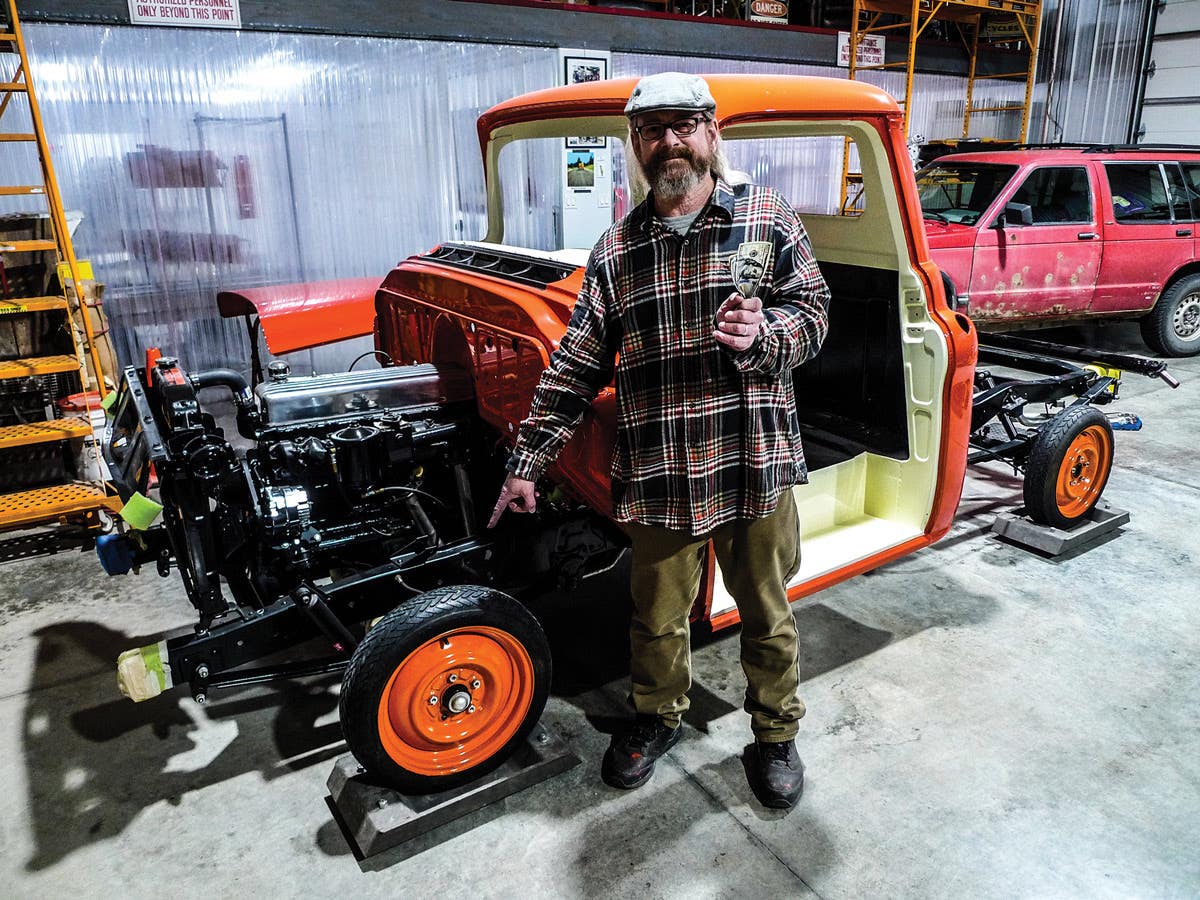
I’m blessed to have access to a terrific mechanic, Donnie Nesselrodt. An ASE Certified Master Technician, Donnie had his own shop, Purcellville Tire & Auto, for many years in Purcellville, Va. He sold his business to AAA, and now he works solo, by appointment, in a splendid facility that he owns in West Virginia. Donnie intuitively understands old Fords and Chevys. He can troubleshoot, weld, fabricate and repair cars with the best of them. I made up a long punch list, and I gathered up the parts I thought he’d need. Donnie trailered the ’40 to his shop.
Over a few weeks, Donnie worked his way through my list. A new master cylinder and a new e-brake cable were procured. A close inspection revealed the brake shoes were new. The rear drums were then bead blasted, finished in gunmetal gray and carefully adjusted. Coker Tire supplied a new set of its excellent “Bias-Look” radials — 5.60:15 in front and 8.20:15 for the rear, with the requisite tubes. I use these same blackwall radials on my Hemi-powered ’39 Ford. They have a tall aspect ratio and plain sidewalls, so they look period-perfect. And they ride and handle beautifully.
I had ordered a set of tubular steel headers from Belond, but when they arrived, they didn’t fit. Turns out they were for earlier 303-/324-cid Oldsmobile engines and the bigger 371s have square center ports. Belond doesn’t make them. Donnie repainted the stock cast-iron manifolds, made new downpipes and, perhaps one day, we’ll fabricate new tubular headers. I ordered a set of new “Shorty” steelpacks from Porter Muffler. They have a deep, mellow sound. The engine mounts were shot, so Donnie installed new “doughnuts.”
Rebuilding kits and floats for the three Rochester carbs from NAPA were a must. Donnie rebuilt the carburetors, adjusted the linkage and carefully set the idle. The two end carburetors were very gummed up. The J-2 has a progressive linkage, and you can run happily on the center carburetor for optimal mileage. I read that, back in the day, owners didn’t fully tromp on the throttle too much, and the barely used carbs had a tendency to gum up. The solution is to bury the throttle more frequently. No problem there. New fuel lines were fabricated. The fuel tank was filled with rotten old ethanol-laced gasoline, so that was drained and flushed. Curiously, the Ford pumpkin didn’t have a drain plug, so Donnie made a new housing for a drain plug, solving that issue.
Some tasks can wait. A hidden-but-complete Vintage Air HVAC system and a built-in stereo are installed. We’ll get to those eventually. The front wishbones were split and hung on brackets welded to the frame, ostensibly to clear the gearbox, but that seems overkill given the existing spacing. They might need redoing -— they hang somewhat lower than I’d like.
Burton Antique Auto Parts, in Dayton Ohio, sells a reproduction of the 1940 Ford rear gravel shield. I ordered one, had it painted black and Donnie installed it. This rare Ford dealer accessory was just $1.95 back in 1940 — they’re $175 today, but they neatly fill most of the gap between the body and bumper, and they look cool. My friend, Jim Cherry, supplied a gennie Ford front license plate bracket.
We found that while some modifications on this car were done very well, others were amateurish. I traced the title back 21 years. Richard Munz acquired the car in January 2004. The last owner before Munz was Richard Craig Bisbee, of Sparta, Mich. — he’d acquired the coupe in July 2003. Unfortunately, Richard Bisbee passed away, so that trail’s cold. Richard Munz doesn’t recall some of the details. When you’ve owned more than 300 cars in your lifetime, as he has, that’s not surprising. Joe Reath, from Long Beach, Calif., has been credited with the engine rebuild, but I have no record of that. Sadly, Joe passed away in January 2013 —- another cold trail.
Back behind the art deco wheel
Here’s the good news: Back together, all tuned up, and filled with fresh 93-octane Sunoco fuel, the ’40 is a delight to drive. With that wide rear, dual leaf springs and Coker radials, it handles a lot better than my old coupe with its antique front and rear buggy springs and skinny 16-inch bias-ply tires. And the new ’40 stops very surely, thanks to its oversized disc/drum brake setup. The acceleration is exhilarating, with great throttle response, a deep “wooooosh” from the three carburetors and a torquey rush to illegal speeds that makes me smile. And it should be —- the 371-cid Olds is nearly 100 cubic inches larger than the flathead in my old car.
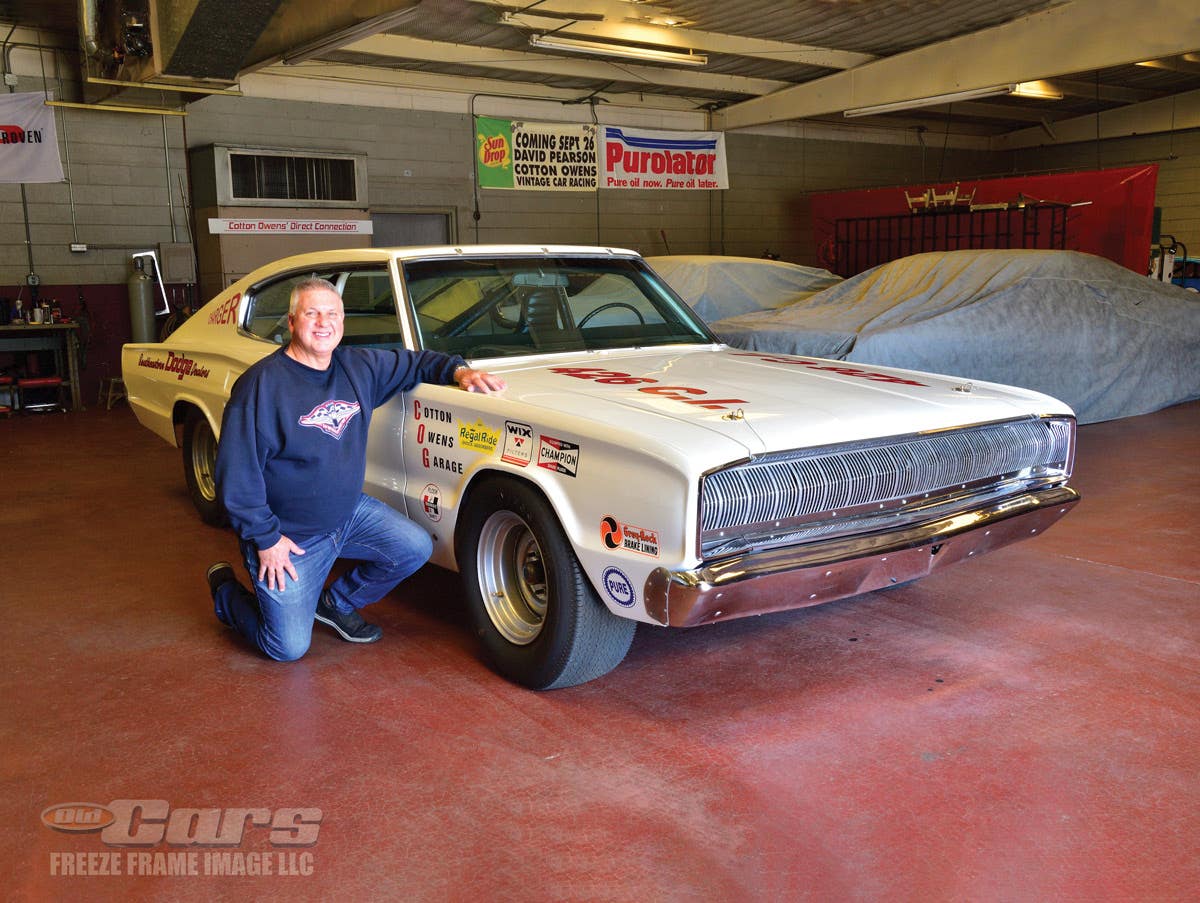
The 1940 LaSalle that supplied the gearbox had a 3.92:1`rear-end ratio, and it weighed 3,710 lbs. The J-2 Olds V-8 (an $83 option in 1957) developed 312 bhp at 4,600 rpm when new, and I think this modified engine has a hot cam, so it’s probably even more powerful. It’s pulling a 3.50:1 Ford rear now, in a car that weighs about 3,100 lbs, with the heavier and more powerful Olds V-8 installed. That LaSalle column-shift gearbox is interesting. 1940 was the first year for a column shift at Ford, so adapting the LaSalle column shifter is very appropriate. It shifts smoothly and it feels like the coupe will wind to 80 mph in second. There’s a kind of electric overdrive attached to the throttle linkage that will hold the throttle in position, but I don’t need it.
I put about 100 miles on the ’40 coupe just last weekend. It runs between 190-195 degrees, checked with my heat gun, on an 82-degree day. There’s already an electric fan that’s controlled by an under-dash switch. But that’s too hot. So by the time you’re reading this, we’ve installed a new 180-degree thermostat, and Donnie was going to fit an overflow tank from Speedway. That should fix the overheating.
Lessons learned? It’s never a bad idea to have a complete inspection when you buy a car. But honesty, I’m really liking this ’40. The repairs didn’t break the bank, and I’d have bought this car even if I’d known it needed some work.
Bottom line, as Bruce Meyer says, “it’s never too late to have a happy childhood.”
If you like stories like these and other classic car features, check out Old Cars magazine. CLICK HERE to subscribe.
Want a taste of Old Cars magazine first? Sign up for our weekly e-newsletter and get a FREE complimentary digital issue download of our print magazine.