

Approximately 10 years ago, I photographed this Starlight Black 1963 Pontiac Catalina 421 Super Duty near Detroit. The Catalina had just undergone a systematic restoration to return it to its factory-original condition after its owner had acquired it.
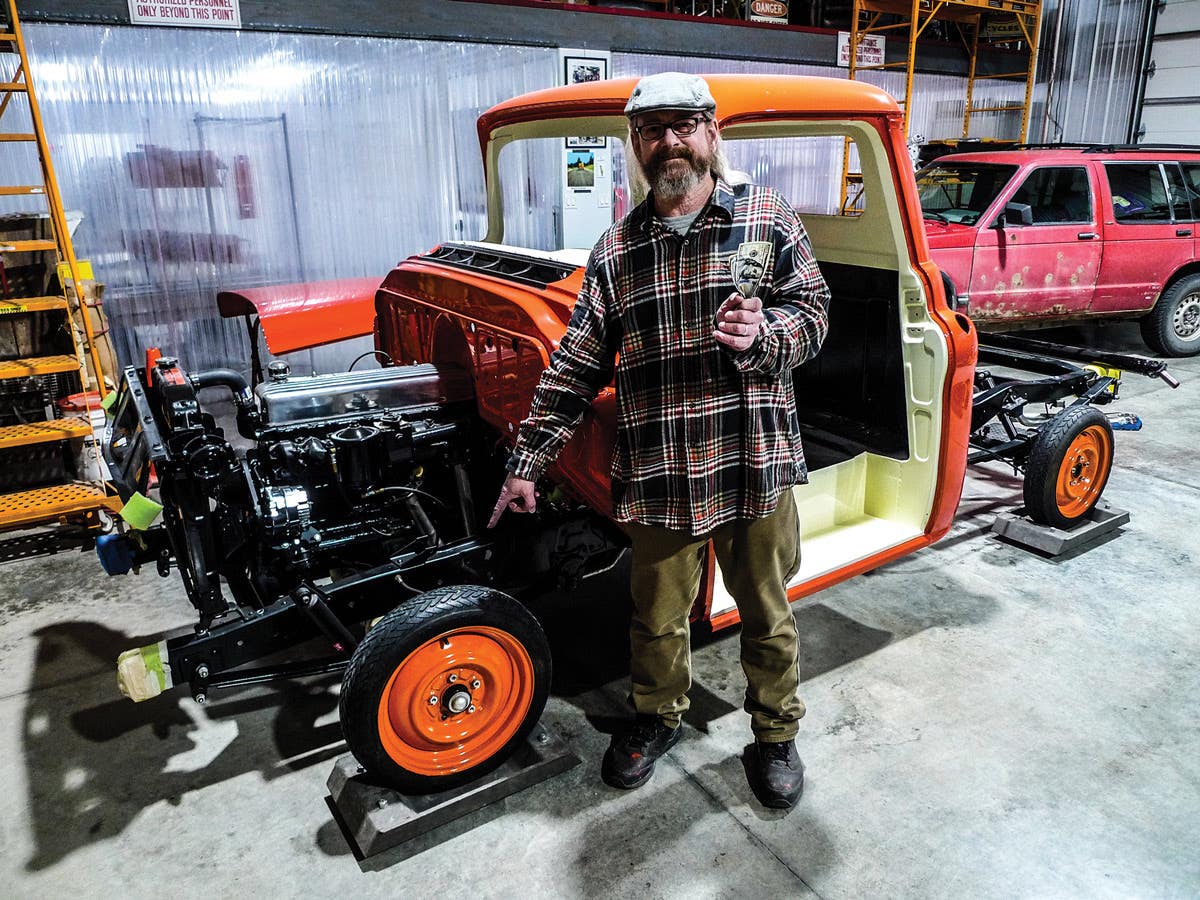
I met Jim Crawford back in 2008 while scouting a local car show and noticed his stunning green 1963 Chevrolet Biscayne in the distance. The hood was open and as I approached it, the massive engine with its “409” valve cover decals instantly caught my eye.
After introducing myself to Jim, he told me the Biscayne’s restoration had just been finished. I asked if he would be interested in having me photograph the show-stopper for a magazine feature and he agreed. Jim also shared that since the Biscayne was finished, he turned his attention toward restoring the featured 1963 Pontiac Catalina Ventura 421 Super Duty. He was working with the same local restorer who had helped with the Biscayne. The Catalina was only as far as the primer stage, but I asked if I could see it and he shared with me the address where the work was being done.
Later in the week, I met Jim at the restoration shop, which was located in an old warehouse just west of Detroit. After seeing the Catalina in person, we decided I would document the restoration process. For all practical purposes, this was the start to my journey of documenting and photographing automobile restorations.
For nearly two years, I followed the Catalina’s restoration, capturing each stage from primer application to block sanding, guide coat, paint application, wet sanding and then buffing. These steps were followed by the final assembly and detailing. What you see in the pictures within this article is the culmination of a process that took more than two years. The finished product is an award-winning, best-in-class restoration that possibly makes this Catalina the finest example on the planet. It has received top honors and awards at the Pontiac Nationals and concours events throughout the Midwest. Like every world-class restoration project, the attention to detail sets this 1963 Pontiac Catalina Ventura 421 Super Duty apart from many of the automobiles it has gone head to head with at judged events.
For me, this Catalina started a new chapter in my journey of capturing classic automobiles and sharing them with the motoring world. Much was learned from this endeavor. Many of the techniques remain in my memory bank and the approach and process that I have successfully used for 17 years started here with Jim Crawford and this 1963 Pontiac Catalina.
The Super Duty is born
In the early 1960s, Detroit was waking up to a new kind of horsepower war. Long before the term “muscle car” had officially entered the lexicon, Pontiac was already staking its claim as a performance leader. At the center of that revolution stood a beast draped in full-size steel: the 1963 Pontiac Catalina 421 Super Duty—a factory-built dragstrip warrior that helped redefine the guts of American performance.
More than just a stoplight brawler, the Catalina Super Duty was the physical embodiment of Pontiac’s growing performance image. Born from a combination of corporate rebellion, engineering brilliance, and a hunger to dominate the quarter-mile, the ’63 Super Duty remains one of the most revered and rare factory-built performance cars of the immediate pre-muscle car era.
Christening the Catalina
The Pontiac Catalina made its debut in 1950 as part of General Motors’ line of new pillarless “hardtop” two-doors that captured the spirit of postwar America. “Catalina” was simply the name of the hardtop derivative of existing Pontiac models until 1959, when it became a stand-alone, mid-line Pontiac model available in hardtop, sedan or even a convertible body types. That year, Pontiac also began its split-grille front-end motif and its “Wide-Track” handling theme, adding more pizzazz to the Pontiac brand as it blazed head-on into its performance marketing strategy under the industry’s brightest minds of the period: General Manager Bunkie Knudsen, marketing whiz Jim Wangers and engineers John DeLorean and Pete Estes.
In 1961, all GM products received a significant restyling and the Catalina model returned, but was now at the bottom of the Pontiac hierarchy as it sat on the make’s shortest full-size car chassis with the least amount of trim. In 1963, the Catalina remained Pontiac’s least-expensive full-size two-door model — and its lightest.
The 1963 Catalina was an integral part of Pontiac’s ambitious performance plans for the ’60s. The American muscle car was beginning to take shape, and Pontiac was right at the forefront of that movement. In fact, the Catalina of this era can be seen as the precursor to Pontiac’s famous GTO, which would arrive a year later in 1964. But before all of that, there was the Catalina — a car that offered great looks consistent with the rest of the Pontiac line, and the perfect full-size lightweight for getting the most out of Pontiac’s hottest engines.
Enter the Super Duty Program
Almost immediately after finally getting a modern overhead-valve, over-square V-8 engine in 1955, Pontiac began experimenting with it to get more horsepower. In 1956, some Pontiac V-8s were fitted with dual four-barrel carburetor setups, and 1957 brought the introduction of the novel fuel-injection system on Bonneville convertibles, as well as the Tri-Power (three two-barrel) option available on all Pontiacs. In 1960, Pontiac developed its first Super Duty (SD) engine packages designed specifically for competition use. These weren’t warmed-over production engines only fit with additional carburetors — they were hand-assembled, heavy-duty, high-compression monsters built for serious racing.
The Pontiac 421-cid V-8, introduced in 1961, was the centerpiece of the Super Duty program that year. Rated at 405 hp by 1963 (though the real number was likely closer to 450), the Super Duty engine featured forged internal components, a high-lift cam, dual Carter AFB four-barrel carburetors, and factory long-tube headers. It was a street-legal powerhouse that could humiliate nearly anything that dared to line up next to it.
Catalina + 421 Super Duty = Fast
While later muscle cars would prioritize lightweight midsize platforms, the 1963 Catalina Super Duty was unapologetically big, bad and brutal. Despite weighing in at more 3,700 pounds, Pontiac engineers found creative ways to shave off weight and increase speed on the most serious lightweight race versions.
Buyers could option their Super Duty Catalina as lightweights with aluminum front-end panels, including the hood, fenders, bumper, and radiator support. Inside, a no-frills interior, sans radio, and optional lightweight bucket seats helped further reduce mass. The “Swiss Cheese” Super Duty Catalinas even had giant holes drilled in their chassis to lighten them up further for drag racing.
Every component of the car—from the heavy-duty suspension and Borg-Warner four-speed manual transmission to the beefed-up rear end—was designed with one purpose in mind: to win. Only about 88 of these lightweightss were built before General Motors, under pressure to downplay its performance image, officially ended factory racing support in early 1963. That makes the ’63 Catalina 421 SD not only rare, but one of the last true expressions of unrestricted factory racing engineering from Pontiac.
Quarter-Mile Royalty
The 1963 Super Duty Catalina found its natural habitat at NHRA-sanctioned dragstrips across the country. In the hands of legendary drivers such as Arnie “The Farmer” Beswick, the Catalina Super Duty quickly built a reputation for devastating performance and unmatched durability. In the early 1960s, his car consistently ran mid-12-second quarter-mile times at more than 110 mph—astonishing numbers for the period and especially impressive considering the big car’s full-frame construction.
The Catalina’s sheer speed helped Pontiac further stake its claim as a performance brand, paving the way for the GTO and the rest of the muscle car revolution. While the Catalina Super Duty wasn’t a muscle car in the classic sense (a midsize car with a big engine), it laid much of the groundwork for what was to come. Perhaps more importantly, it gave engineers like DeLorean the confidence to plant the 389-cid V-8 into the midsize 1964 Tempest — creating the Pontiac GTO and igniting the muscle car era.
The ’63 SD Catalina is now one of the most sought-after collector cars in American muscle history. Survivors trade hands for six-figure prices, and rightly so — each one represents a brief but glorious chapter where engineers were allowed to build unfiltered performance machines with full factory support.
Love Ponchos? Here are a few more articles for your reading enjoyment.
SHOW US YOUR WHEELS!
If you’ve got an old car you love, we want to hear about it. Email us at oldcars@aimmedia.com
If you like stories like these and other classic car features, check out Old Cars magazine. CLICK HERE to subscribe.
Want a taste of Old Cars magazine first? Sign up for our weekly e-newsletter and get a FREE complimentary digital issue download of our print magazine.