
The phone call that a parent of any age dreads and hopes they never get came at 10:30 p.m. on Saturday, July 5. A call at 10:30 on a Saturday night can never be good — unless you are expecting a new grandbaby.
My son, Damon, was on the other end of the line. Gratefully, he led off with, “I’m OK…” — sudden relief! — followed by “… but the car is totaled.”
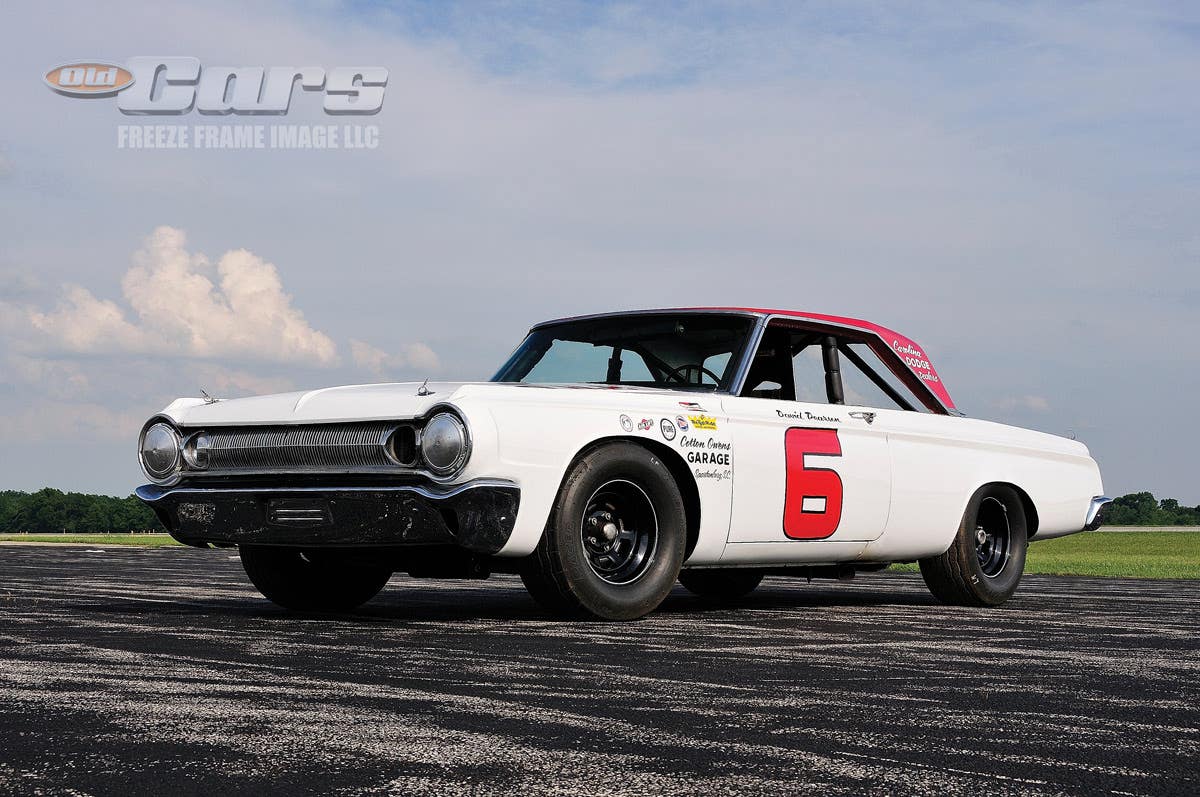
Knowing he was at the hospital, but had been checked out and released with only a bump on his head, my mind turned to the car. We had found the 1963 Dodge Custom 880 two-door hardtop in Boulder, Colo., and flat-towed it back to Nebraska in 1988. It was Damon’s first car. He had been driving it and working on it for 37 years, even taking it along when he moved across the country and back.
Custom 880: Reviving the ‘Big Dodge’
The 1963 Dodge 880 was a beautiful car, but few people are familiar with its heritage.
Prior to 1960, Dodges rode on a 122-inch-wheelbase chassis, the same as Chrysler Windsor and Newport models and all De Sotos (which exited the company entirely early in 1961).
During the 1960 and 1961 model years, the higher-level Dodge Polaras and Matadors continued on that platform, while 90 percent of the production was in the new Dart line — Seneca, Pioneer and Phoenix — on a 118-inch wheelbase, the same as the Plymouth.
The entire 1962 Dodge line-up was totally redesigned, downsized and renamed. All models except station wagons were built on a new 116-inch-wheelbase platform and measured 202 inches in length. The new Lancer compact had joined the family in 1961 in two series designated “Lancer 170” and “Lancer 770.” That numbering system now extended to the rest of the line with Dart 330 and Dart 440 series, and the Polara 500 series offering two-door and four-door hardtops and a convertible.
As far as many customers were concerned, neither the size nor the styling of the ’62s were appealing. Loyal Dodge owners soon flooded local dealerships, asking “Where is the big Dodge I’m used to driving?”
Chrysler Corp. designers and engineers were quick to respond. The full-sized Polara was gone, after selling a mere 14,032 passenger cars and station wagons during the 1961 model year. Chrysler assembly lines were still turning out the C-body Newports and 300s on the same 122-inch-wheelbase platform, so those unit bodies from the cowl back were combined with front clips from the ’61 Polara models to create a new Dodge Custom 880 line that hit dealer showrooms on Jan. 21, 1962.
Some 17,500 4-door sedans and hardtops, two-door hardtops and convertibles, and six- and nine-passenger station wagons were sold by the end of the 1962 model year. A chromed, die-cast grille of thin vertical bars, and a new front bumper and taillamps, were designed to give the 1963 Custom 880s a fresh appearance. Production increased to more than 28,000. Another facelift for 1964 included a redesign of the rear end and another new grille, and production reached nearly 32,000 cars.
Dodge’s “big cars” came to market for 1965 with a totally new design spanning three series on a 121-inch wheelbase. The Custom 880 series fell between the Polara and the Monaco series and accounted for about 35,000 of the 135,000 total vehicle sales.
A life-long work in progress
We towed Damon’s ’63 880 home after his purchase. Even though it was running and driving, we didn’t want to risk the possibility of something going wrong with a 25-year-old vehicle on a 500-mile trip. Besides, the side windows had been broken out by vandals, which was why we got a good price on it. Having them replaced became the first order of business in making it roadworthy.
Damon replaced the original 361-cid V-8 with a rebuilt 383 Plymouth Road Runner engine which has provided trouble-free service. He had the interior in the process of being upgraded with four bucket seats and a full-length console from a ’62 Chrysler 300H, which shared the same body shell. Through the years, many other rebuilding and upgrading steps had taken place.
The Dodge has never been “ready for prime time” with show paint and upholstery, but was fine for cruise nights and occasional road trips.
In his role as editor of the Goodguys Gazette for the Goodguys Rod & Custom Association, Damon had driven the Dodge to Des Moines, Iowa, for the organization’s Heartland Nationals. On that fateful Saturday night, he had worked late at the Iowa State Fairgrounds and was headed back to his hotel on the opposite end of the city.
While driving about 60 mph in the middle of three lanes on the interstate highway, he was suddenly hit from behind by a large pickup (he thinks it was an F-150). The blow turned the Dodge 90 degrees to the left and it crashed into the concrete barrier on the median side of the roadway. Damon managed to get out of the car and was leaning against the barrier, taking inventory of his body parts, when a second pickup crashed into the Dodge’s left rear quarter that was sticking out into the driving lane. Truck No. 1 had stopped on the other side of the road, but with Truck No. 2 getting involved, the first one took off. Let somebody else take the blame for the crash, I guess.
Damon had good coverage from a collector car insurance company, which provided a settlement that allowed the option to retain possession of the Dodge. The mangled remains of the once-beautiful custom hardtop were hauled home and many usable parts were salvaged, including the engine and transmission and the 300H interior components.
The next chapter
Two takeaways from this experience. Always wear your seat belt. Damon’s car had only lap belts, and he had his buckled, as always. The force of the crash into the concrete barricade bent his body forward, and his head hit the steering wheel.
Also, Chrysler deserves credit for adopting the unit-body design for its cars only three years before this one was built. The entire passenger compartment remained intact while both the front and rear quarters were completely mangled. None of the glass was broken, except for minor cracking on the right side of the windshield, which popped an inch out of its frame from the force.
Finding a decent 60-year-old Custom 880 hardtop as the basis for a rebuild is not an easy task. We discovered the Dodge Division built only 2,804 of this model. However, Damon managed to locate three, and chose to buy one to recreate his dream car. Having been through it once, maybe this one won’t take 37 years to build!
If you like stories like these and other classic car features, check out Old Cars magazine. CLICK HERE to subscribe.
Want a taste of Old Cars magazine first? Sign up for our weekly e-newsletter and get a FREE complimentary digital issue download of our print magazine.